
17 Best eCommerce CRO Tools for A/B Testing, Analytics & Personalization
 Reading time: 19 min
Choosing the right eCommerce CRO tools depends on where your online store loses conversions. Analytics platforms help identify funnel drop-offs, heatmaps and session recordings reveal usability issues, and A/B testing software helps validate changes to product pages, cart experiences, and checkout flows.
For Shopify and other eCommerce businesses, the right CRO stack may also include product recommendations, personalization, customer feedback, and offer testing.
In this guide, we compare 17 eCommerce conversion rate optimization tools by their key features, use cases, integrations, pricing models, and limitations to help you choose the right solutions for your store.
What Are eCommerce CRO Tools?
eCommerce CRO tools are software platforms that help online stores identify conversion barriers, analyze customer behavior, test improvements, and personalize shopping experiences.
They support different stages of optimization, from understanding why shoppers abandon product pages or checkout to measuring whether new designs, offers, and recommendations improve purchases, revenue per visitor, or average order value.
No single tool replaces the full CRO process. Most stores need a combination of analytics, customer research, and experimentation rather than a large collection of overlapping apps.
Best eCommerce CRO Tools at a Glance
The best eCommerce CRO tools help online stores identify conversion barriers, understand customer behavior, test improvements, and personalize shopping experiences.
However, different tools serve different purposes. Some specialize in A/B testing, while others focus on analytics, heatmaps, user research, lead capture, or product recommendations.
The table below compares 17 eCommerce conversion rate optimization tools based on their primary functions and ideal use cases.
| Tool | Tool Category | Best For |
|---|---|---|
| Shopify Rollouts | A/B Testing | Native Shopify experiments |
| Intelligems | A/B Testing | Pricing, offers, and profit optimization |
| Shoplift | A/B Testing | Shopify themes and product pages |
| Wingify (VWO / AB Tasty) | A/B Testing | Advanced experimentation and personalization |
| Optimizely | A/B Testing | Enterprise experimentation |
| Shopify Analytics | Analytics | Shopify sales and purchase funnel reporting |
| Google Analytics 4 | Analytics | Traffic, customer journeys, and funnel analysis |
| Contentsquare (formerly Hotjar) | Behavior Analytics | Session replay, funnels, and experience analytics |
| Lucky Orange Behavior Analytics | Behavior Analytics | eCommerce heatmaps, recordings, and surveys |
| UserTesting | User Research | Moderated and unmoderated usability research |
| Lyssna | User Research | Rapid product-page and design testing |
| Sleeknote | Lead Capture | eCommerce popups, offers, and email capture |
| OptinMonster | Lead Capture | Exit-intent campaigns and email capture |
| Nosto | Personalization | Product recommendations and merchandising |
| LimeSpot | Personalization | Personalized recommendations, bundles, and upsells |
| Hotjar | Heatmaps, scroll maps, session recordings | Teams visualizing where users experience friction or ignore CTAs |
| Dynamic Yield | Personalization | Enterprise omnichannel personalization |
Best A/B Testing Tools for eCommerce
A/B testing tools help eCommerce teams measure whether changes to product pages, pricing, store layouts, and purchasing experiences lead to better business outcomes.
1. Shopify Rollouts
Best For: Shopify merchants looking to test store changes without installing a separate experimentation platform.
Core Features: Native A/B experiments, traffic allocation, scheduled launches, theme changes, catalog changes, and experiment analytics.
eCommerce Use Case: Compare storefront designs, offers, or supported configuration changes before a full rollout.
Limitations: Experiments require Shopify Grow or higher. Vintage themes, Liquid template changes, and some headless scenarios are unsupported.
Integrations: Built directly into the Shopify admin.
Pricing: Included with eligible Shopify plans.
2. Intelligems
Best For: Shopify and DTC brands optimizing product pricing, promotional offers, and profit per visitor.
Core Features: A/B testing, pricing experiments, theme and content testing, merchandising offers, shipping experiments, and checkout optimization modules.
eCommerce Use Case: Test different product prices, bundle offers, shipping thresholds, or product page layouts to identify changes that improve revenue and profitability.
Limitations: Shopify-only. Checkout testing requires Shopify Plus, while shipping-rate experiments have additional plan requirements. Pricing modules involve a minimum commitment.
Integrations: Shopify, Klaviyo, and supported analytics and subscription integrations.
Pricing: Modular plans based on order volume and selected features.
3. Shoplift
Best For: Shopify merchants running experiments on product pages, storefront layouts, and themes.
Core Features: A/B testing for Shopify themes and templates, visual editing, audience targeting, experiment reporting, and conversion tracking.
eCommerce Use Case: Compare product page designs, navigation structures, cart layouts, or alternative storefront experiences to measure their effects on purchases and revenue.
Limitations: Primarily designed for Shopify. Some editing options depend on theme architecture, and specialized pricing or checkout experiments may require other solutions.
Integrations: Shopify, supported page builders, subscription apps, and analytics tools.
Pricing: Paid plans with features and eligibility varying by subscription.
4. Wingify (VWO / AB Tasty)
Best For: Growing and enterprise eCommerce teams running advanced experimentation and personalization programs.
Core Features: A/B/n testing, split URL testing, multivariate experiments, audience targeting, behavioral analytics, feature management, and personalization.
eCommerce Use Case: Test product page layouts, purchasing journeys, promotional messaging, and personalized experiences across multiple customer segments.
Limitations: More advanced implementations may require technical resources, careful tracking configuration, and experimentation governance.
Integrations: Web platforms, APIs, analytics systems, and supported data integrations.
Pricing: Custom pricing based on selected products, traffic volume, and implementation requirements.
Note: VWO and AB Tasty united under the Wingify brand in 2026.
5. Optimizely
Best For: Enterprise eCommerce businesses operating large-scale experimentation programs across complex websites.
Core Features: Web A/B testing, multivariate experiments, audience targeting, visual editing, multi-page tests, feature experimentation, and advanced reporting.
eCommerce Use Case: Evaluate changes across product discovery, product detail pages, checkout journeys, and customer segmentation using controlled experiments.
Limitations: Advanced implementations may require development resources, technical integrations, and a dedicated experimentation team. It is not primarily a Shopify-native testing app.
Integrations: Google Analytics 4, APIs, and supported analytics and customer-data systems.
Pricing: Contact sales for a quote based on experimentation requirements.
Best eCommerce Analytics Tools
Analytics tools help identify where shoppers abandon their purchasing journey and which products, pages, and customer segments need further investigation.
6. Shopify Analytics
Best For: Shopify merchants monitoring store performance, purchasing behavior, and sales funnels.
Core Features: Sales reports, conversion metrics, product performance, traffic analysis, customer reports, and checkout funnel reporting.
eCommerce Use Case: Identify products with strong traffic but weak sales, compare mobile and desktop performance, and review cart-to-checkout progression.
Limitations: Shopify-only. It does not replace session recordings, customer interviews, or controlled experimentation. Report availability and customization vary by plan.
Integrations: Native Shopify orders, products, customers, and sales channels.
Pricing: Included with Shopify subscriptions, subject to plan-specific reporting features.
7. Google Analytics 4 (GA4)
Best For: eCommerce businesses analyzing acquisition channels, user behavior, and conversion funnels.
Core Features: Event tracking, funnel exploration, audience segmentation, attribution reporting, eCommerce events, and custom explorations.
eCommerce Use Case: Analyze view_item, add_to_cart, begin_checkout, and purchase events to identify funnel drop-offs and compare customer segments.
Limitations: Requires accurate event implementation. Consent settings, ad blockers, attribution rules, and tracking gaps can create discrepancies with actual sales data.
Integrations: Shopify through supported implementations, Google Ads, BigQuery, and other analytics systems.
Pricing: Free standard version; enterprise Analytics 360 is available separately.
Best Heatmap and Session Recording Tools for eCommerce
Behavior analytics tools help teams investigate how shoppers interact with product pages, navigation, forms, and cart experiences.
8. Microsoft Clarity
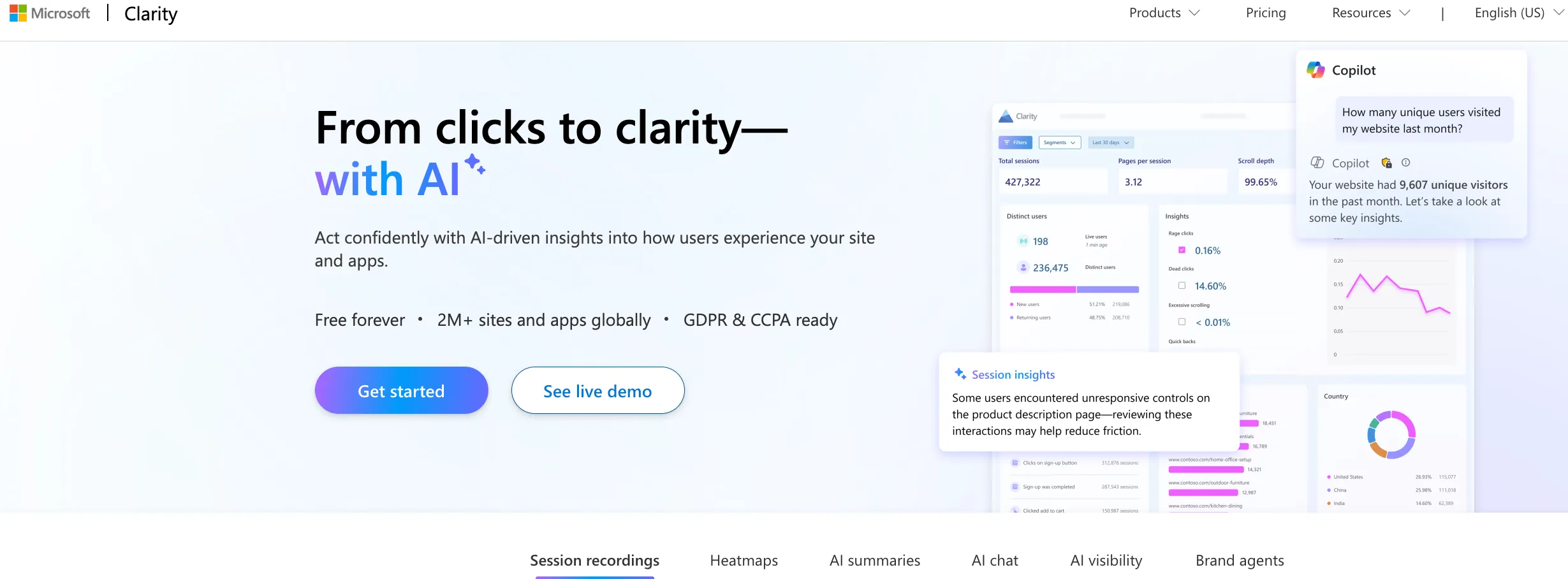
Best For: Online stores looking for free heatmaps and session recordings.
Core Features: Click and scroll heatmaps, session recordings, frustration signals, behavioral filters, and AI-assisted summaries.
eCommerce Use Case: Investigate why shoppers struggle with product variants, overlook purchase buttons, or abandon important pages.
Limitations: Behavioral observations do not establish causation. Clarity does not replace A/B testing or transactional analytics, and sensitive customer information must be appropriately protected.
Integrations: Shopify, Google Analytics, and website tracking implementations.
Pricing: Free.
9. Contentsquare (Formerly Hotjar)

Best For: eCommerce teams seeking detailed customer journey analysis and behavioral insights.
Core Features: Heatmaps, session replays, journey analysis, funnels, surveys, experience analytics, and error monitoring.
eCommerce Use Case: Identify product page friction, investigate confusing shopping journeys, and analyze behavior before cart or checkout abandonment.
Limitations: Advanced analytics, historical data access, and session allowances depend on the selected plan. Behavioral patterns should be validated with additional research.
Integrations: Shopify and other websites through supported integrations and tracking implementations.
Pricing: Free plan available, with paid Growth, Pro, and Enterprise options.
10. Lucky Orange
Best For: Shopify and eCommerce businesses investigating usability issues and shopping behavior.
Core Features: Dynamic heatmaps, session recordings, conversion funnels, form analytics, customer surveys, and live visitor insights.
eCommerce Use Case: Investigate product page hesitation, mobile navigation problems, cart abandonment, and difficult form interactions.
Limitations: Recorded sessions and heatmaps for Shopify-hosted checkout require Shopify Plus; standard Shopify plans have more limited checkout visibility. Usage and storage depend on the plan.
Integrations: Shopify, other website platforms, and supported analytics integrations.
Pricing: Paid plans based on session volume, with a seven-day free trial.
Best User Research Tools for eCommerce
User research tools help online stores understand customer motivations and test whether shoppers can complete important tasks.
11. UserTesting
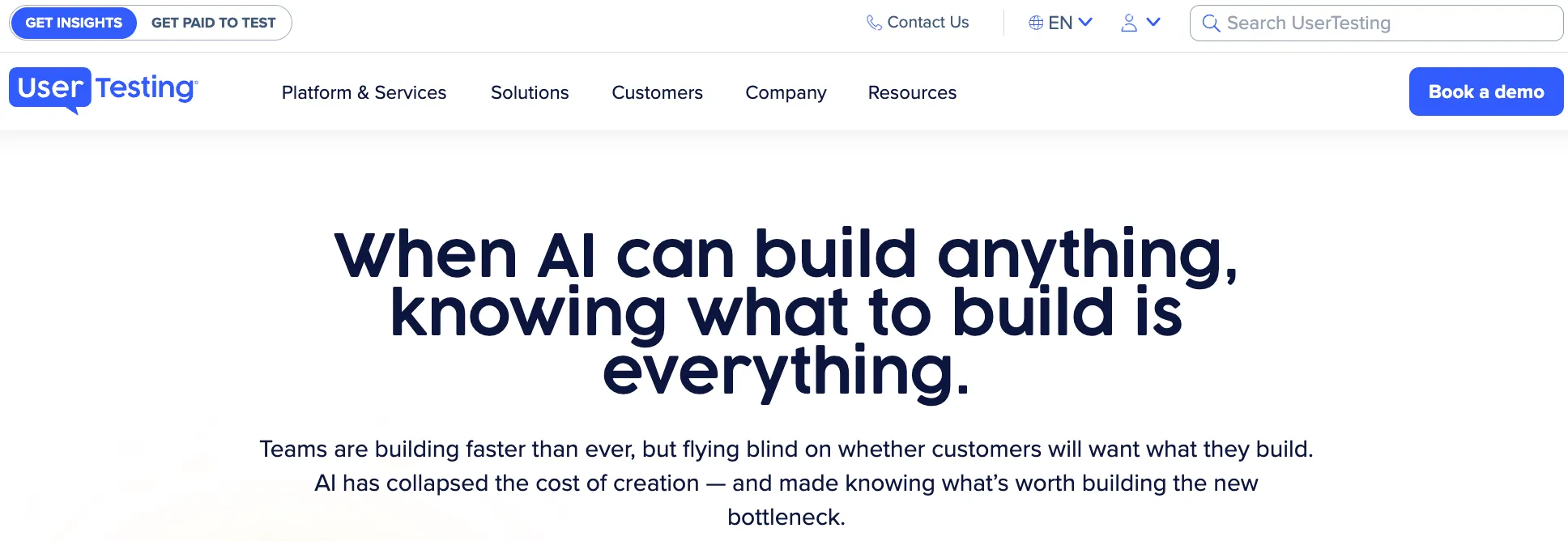
Best For: Established eCommerce businesses conducting usability research with real participants.
Core Features: Moderated interviews, unmoderated usability tests, participant recruitment, screen recordings, and research analysis.
eCommerce Use Case: Observe shoppers navigating product categories, comparing product options, selecting variants, or attempting to complete purchases.
Limitations: Research requires appropriate participant selection and a clear study design. Findings from small qualitative samples should not be treated as statistically representative conversion results.
Integrations: Figma, Slack, Microsoft Teams, Jira, and supported research workflows.
Pricing: Custom plans based on research usage and enterprise requirements.
12. Lyssna
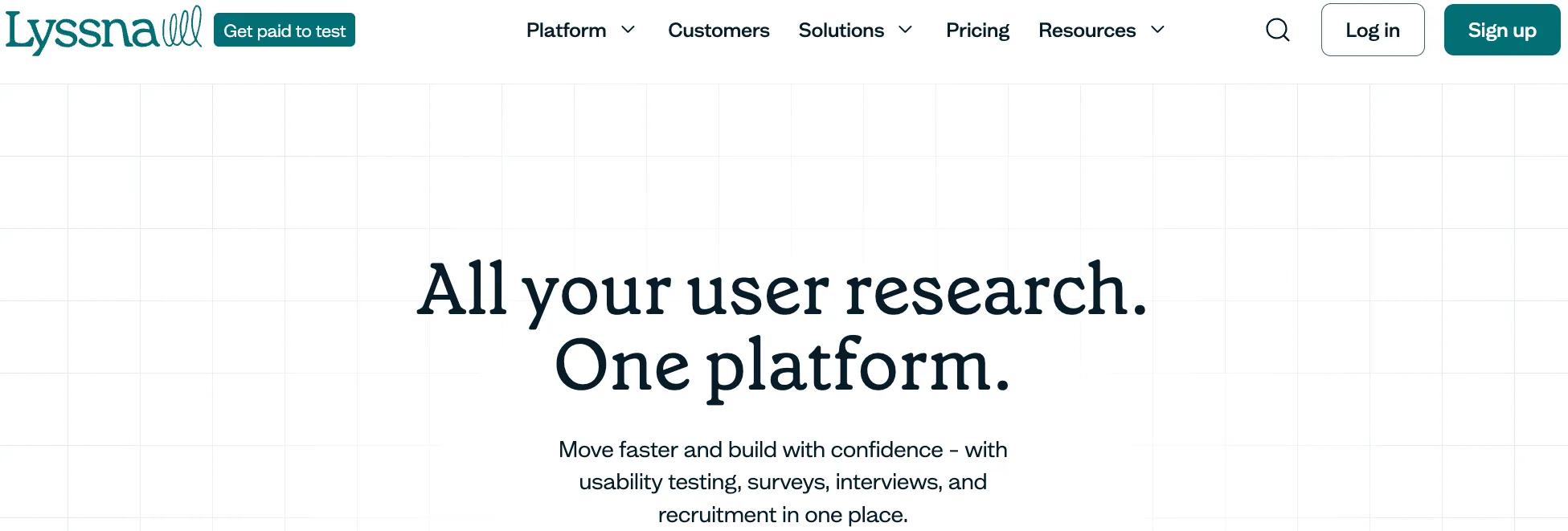
Best For: eCommerce teams quickly testing product page concepts, navigation, and design clarity.
Core Features: First-click testing, five-second tests, preference tests, prototype testing, surveys, and user interviews.
eCommerce Use Case: Check whether customers can identify purchase buttons, understand product messaging, compare layouts, or navigate proposed product page designs.
Limitations: Prototype and preference test results do not directly demonstrate improvements in live purchase conversion. Recruiting participants from Lyssna's panel incurs additional costs.
Integrations: Figma-based workflows, prototype links, and supported research tools.
Pricing: Free plan available, with paid Growth and Enterprise plans.
Best Lead Capture Tools for eCommerce
Lead capture tools help stores collect subscriber information, communicate relevant offers, and re-engage visitors. Their effectiveness should be measured beyond email signups.
13. Sleeknote
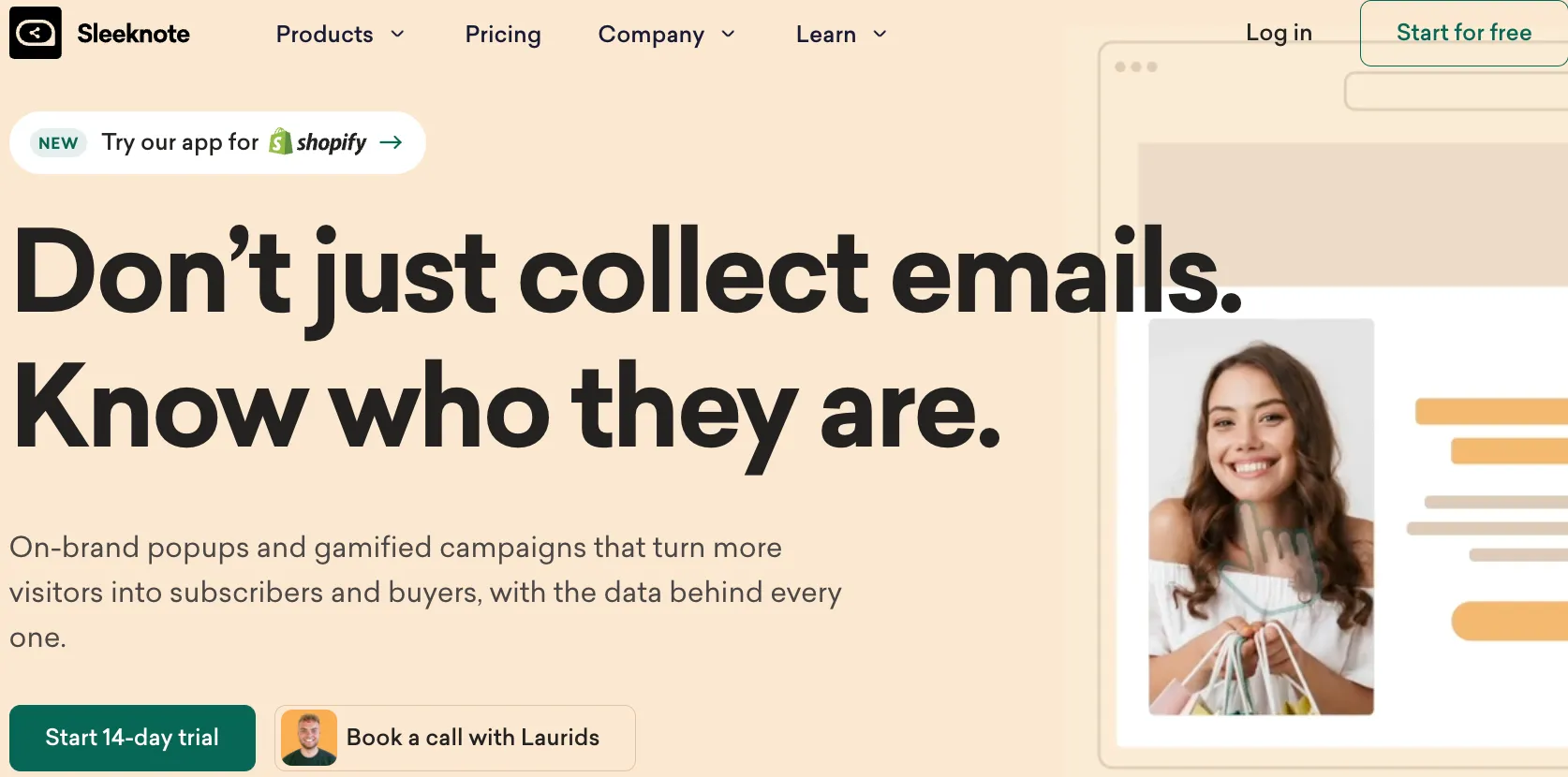
Best For: eCommerce brands using targeted popups to grow email lists and promote relevant offers.
Core Features: Popup campaigns, behavioral targeting, exit-intent triggers, A/B testing, personalized messages, and gamification options.
eCommerce Use Case: Offer relevant signup incentives, communicate promotions, or recover hesitant shoppers without adding unnecessary friction to the purchase journey.
Limitations: Excessive or poorly timed popups can disrupt shopping. Email capture improvements should be evaluated alongside purchases and revenue.
Integrations: Shopify, WooCommerce, Magento, BigCommerce, Klaviyo, and other email platforms.
Pricing: Paid plans based on website traffic, with a 14-day free trial.
14. OptinMonster
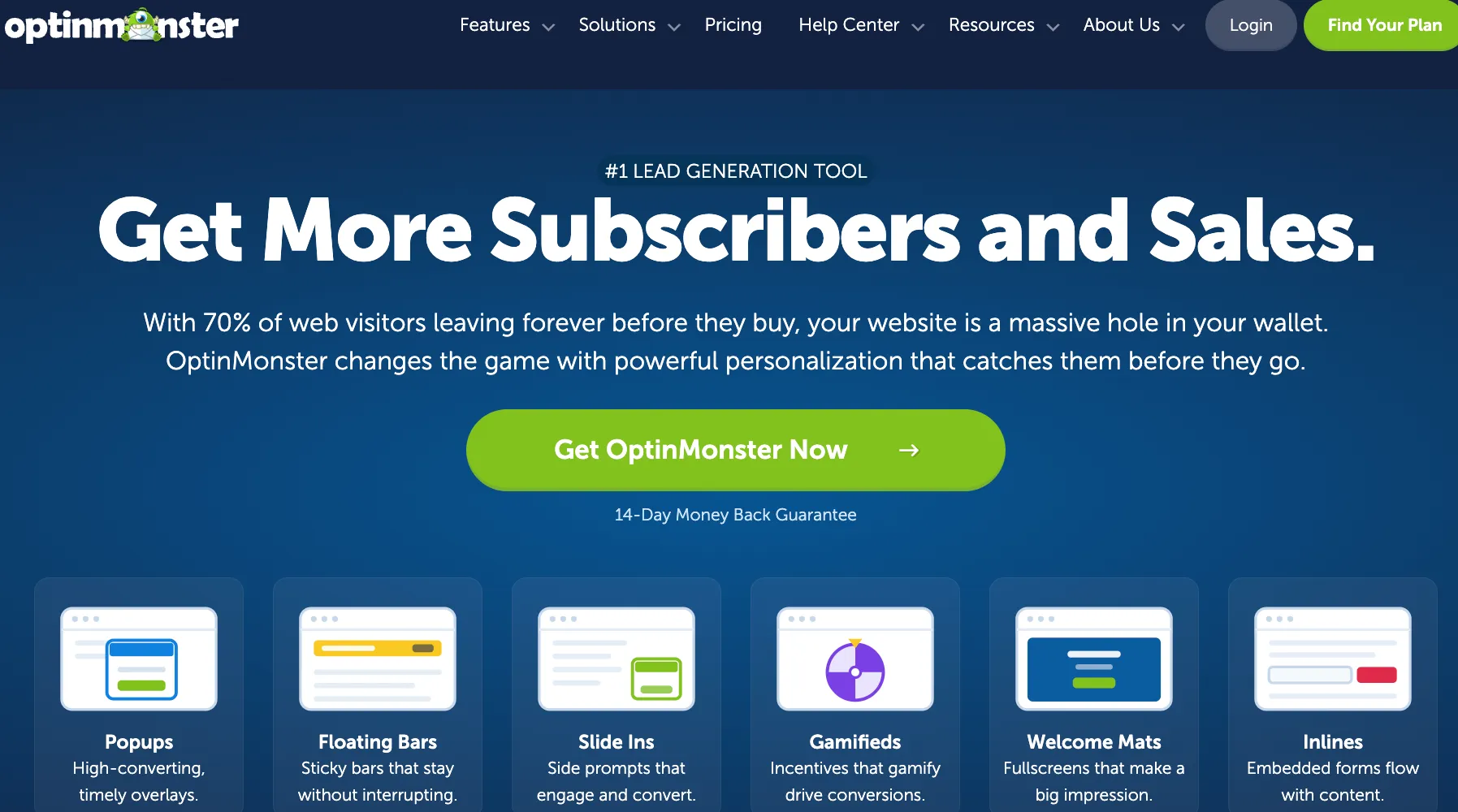
Best For: Online stores using targeted lead capture and exit-intent campaigns.
Core Features: Popup builders, behavioral triggers, page targeting, exit-intent campaigns, campaign A/B testing, and conversion reporting.
eCommerce Use Case: Test email signup offers, targeted promotions, and cart-related campaigns to encourage shoppers to return or complete purchases.
Limitations: Important features, including advanced eCommerce integrations and exit-intent functionality, are plan-dependent. High popup frequency may negatively affect user experience.
Integrations: Shopify, WooCommerce, Magento, WordPress, and supported email marketing platforms.
Pricing: Paid subscription tiers with introductory offers and annual or monthly billing.
Best eCommerce Personalization Tools
Personalization tools help stores tailor product discovery, recommendations, and merchandising. Their results should be validated using actual purchases and revenue.
15. Nosto
Best For: Mid-market and enterprise eCommerce brands improving product discovery, recommendations, and merchandising.
Core Features: AI-powered recommendations, personalized search, category merchandising, dynamic bundles, segmentation, and content personalization.
eCommerce Use Case: Recommend relevant products on PDPs and cart pages, personalize collection sorting, or test merchandising strategies that may increase purchases and average order value.
Limitations: Requires accurate product data, catalog integration, and ongoing campaign management. Personalization does not automatically improve conversions.
Integrations: Shopify, Adobe Commerce/Magento, and supported commerce platforms.
Pricing: Custom modular pricing based on selected products, traffic, and business volume.
16. LimeSpot
Best For: Shopify and BigCommerce stores improving product recommendations, bundles, and cross-sells.
Core Features: AI-powered recommendations, frequently bought together offers, product bundles, personalized merchandising, and post-purchase offers.
eCommerce Use Case: Test complementary product recommendations, bundles, or upsell placements on product pages and cart experiences to improve average order value.
Limitations: Pricing depends on store performance and selected product tier. Some checkout-specific features and implementation options depend on Shopify plan restrictions.
Integrations: Shopify, BigCommerce, SHOPLINE, and supported commerce integrations.
Pricing: Revenue- or order-based plans, with free trials available.
17. Dynamic Yield
Best For: Enterprise eCommerce businesses managing advanced personalization across multiple channels.
Core Features: AI-powered recommendations, audience segmentation, experience targeting, experimentation, and omnichannel personalization.
eCommerce Use Case: Personalize product recommendations, category experiences, promotional content, and cross-channel shopping journeys using behavioral and customer data.
Limitations: Requires substantial data integration, configuration, and ongoing management. It is generally more suitable for established enterprise teams than smaller stores.
Integrations: Websites and applications through APIs, SDKs, customer-data connections, and product catalog feeds.
Pricing: Custom enterprise pricing available through sales consultation.
How to Choose the Right eCommerce CRO Tools
The best eCommerce CRO tools are those that help solve a specific conversion problem rather than add more dashboards to your marketing stack.
Before investing in a new platform, evaluate:
- Conversion Bottleneck: Are you trying to improve product page conversions, checkout completion, average order value, or customer retention?
- Platform Compatibility: Does the tool support your eCommerce platform, theme, checkout configuration, and existing integrations?
- Testing Capabilities: Can you validate changes through reliable A/B testing and measure their effect on purchases and revenue?
- Data Quality: Does the platform provide trustworthy reporting and integrate with your analytics and transaction data?
- Implementation Effort: How much development, QA, maintenance, and ongoing management does it require?
- Total Cost: Consider subscription fees, traffic-based charges, implementation costs, and the resources needed to use the tool effectively.
Start with the problem you need to solve, then choose the smallest practical combination of tools that supports research, implementation, and measurement.
| Your eCommerce Problem | Tools to Consider | What to Measure |
|---|---|---|
| Low product page conversion | Clarity, Contentsquare, Shoplift | Product page-to-purchase conversion rate, Revenue per User (RPU) |
| Low checkout completion | Shopify Analytics, GA4, Lucky Orange | Checkout completion, payment failures |
| Unclear pricing or offer effectiveness | Intelligems | Revenue per User (RPU), profit per visitor, Average Order Value (AOV) |
| Poor product discovery | Nosto, LimeSpot | Product discovery engagement, purchase conversion rate, Revenue per User (RPU) |
| Weak mobile UX | Clarity, UserTesting, Shoplift | Mobile Conversion Rate (CVR), Revenue per User (RPU) |
| Low email capture | Sleeknote, OptinMonster | Email opt-ins, downstream purchase impact |
| Complex enterprise experimentation | Wingify, Optimizely | Experiment outcomes and revenue impact |
Recommended eCommerce CRO Tool Stacks by Store Size
Not every online store needs an enterprise experimentation platform. The right CRO stack depends on traffic, conversion volume, technical resources, and the complexity of the customer journey.
For smaller Shopify stores, start with reliable analytics and behavioral research tools. As traffic and experimentation needs grow, add platforms for controlled testing, pricing optimization, or personalization.
| Store Type | Suggested CRO Stack |
|---|---|
| Small Shopify Store | Shopify Analytics + GA4 + Microsoft Clarity |
| Growing DTC Brand | Shopify Analytics + Clarity/Contentsquare + Shopify Rollouts or Shoplift |
| Established eCommerce Brand | GA4 + User Research + Intelligems/Shoplift + Nosto |
| Enterprise eCommerce | Advanced Analytics + Wingify/Optimizely + Contentsquare + Personalization |
Do You Need an eCommerce CRO Agency if You Already Use CRO Tools?
eCommerce CRO tools provide valuable data, but turning insights into measurable revenue growth requires the right expertise. An experienced CRO agency combines customer research, UX optimization, and A/B testing to identify conversion barriers and validate improvements.
Conversion Rate Store is an ideal CRO partner for eCommerce brands and online marketplaces. Here's what sets us apart:
- Proven eCommerce Results: Explore our library of 11 eCommerce CRO case studies and 6 marketplace case studies. Documented A/B tests include a 29% conversion uplift for MarieMur, a 23% increase in revenue per user for SomniFix, and a 9% revenue-per-user uplift for Moonmagic.
- Full-Funnel eCommerce Expertise: We optimize the entire shopping journey, including product discovery, product pages, cart, checkout, subscriptions, and mobile experiences.
- Research-Driven CRO Methodology: Our approach combines funnel analytics, customer research, behavioral analysis, hypothesis development, and controlled A/B testing to validate improvements.
- Fully Outsourced CRO Team: Get access to dedicated analysts, UX researchers, CRO strategists, designers, developers, and QA specialists without building a complete in-house team.
- Global Recognition: Ranked #1 worldwide in Clutch's Conversion Optimization Leaders Matrix in October 2026, supported by verified client reviews and industry recognition.
Not sure how to choose the right agency?
Read our guide to the best eCommerce CRO agencies to compare leading providers and understand what to look for in an optimization partner.
Conclusion
Choosing the best eCommerce CRO tools starts with understanding your store's conversion challenges. Analytics, behavioral research, experimentation, and personalization platforms each serve different purposes, and the right combination depends on your business needs.
However, software alone cannot identify every conversion barrier or determine which changes will increase revenue.
Want to improve conversions and revenue from your existing traffic? Explore our eCommerce CRO services or talk to our CRO team about your optimization goals.
FAQ
What Are the Best CRO Tools for eCommerce?
The best eCommerce CRO tools depend on your store's needs. Shopify Analytics and GA4 help track conversions, Microsoft Clarity and Contentsquare provide behavioral insights, while Shopify Rollouts, Intelligems, and Shoplift support different types of experimentation.
For personalization and merchandising, platforms such as Nosto and LimeSpot can help optimize product recommendations and shopping experiences.
What Are the Best CRO Tools for Shopify?
Shopify Analytics, Shopify Rollouts, Intelligems, Shoplift, and Microsoft Clarity are useful options for Shopify stores.
The right choice depends on whether you need funnel analysis, A/B testing, pricing experiments, or behavioral insights. Confirm compatibility with your Shopify plan and theme before implementation.
Are There Free eCommerce CRO Tools?
Yes. Shopify stores can start with built-in analytics, GA4, and Microsoft Clarity. Contentsquare also offers a free plan for behavioral analytics.
Shopify Rollouts supports native experimentation on eligible plans. Free tools can provide valuable insights, but advanced experimentation and personalization may require paid solutions.
Which eCommerce CRO Tools Are Best for A/B Testing?
Shopify Rollouts, Intelligems, and Shoplift offer different experimentation capabilities for Shopify stores. Wingify and Optimizely are additional options for businesses running more complex experimentation programs.
Compare the supported test types, integrations, statistical reporting, and implementation requirements before choosing a platform.